
In today’s competitive landscape, understanding how to multiply sales and enhance the effectiveness of sales teams is crucial for sustained growth and success. Employing the 6 D's framework can efficiently guide organizations toward achieving their sales targets. Let’s delve into each of these components, illustrating their significance and practical application, so your sales strategy can flourish.
1. Demonstrate: Demonstration is the foundation of effective sales training. By showcasing the best practices in selling, you not only provide new recruits with a clear example of what is expected but also equip managers with the tools to run productive sales meetings and effectively recruit new talent. This first step is about leading by example; it involves showing how to engage prospects, maneuver through objections, and close deals. When sales leaders actively engage in demonstrations, they establish a culture of excellence that encourages others to follow suit. New team members can take notes on successful tactics and adapt their approach, fostering a learning environment that prioritizes skill-building and professionalism.
Key Actions: - Conduct regular role-playing sessions where experienced salespeople model effective techniques. - Video record successful sales presentations for review and training purposes. - Create a mentorship program where seasoned professionals guide newcomers through live sales experiences.
2. Document: Once a strategy shows promise, it is paramount to document the success in detail. This documentation should capture the specific actions, strategies, and decision-making processes that led to achieving those results. A well-documented process not only serves as a blueprint for replicating success but also provides insights that can refine practices over time. Encourage your team to keep detailed records of meetings, customer interactions, and strategies employed so that these can be reviewed and optimized. This step is about creating a robust knowledge base that supports continuous learning and improvement.
Key Actions: - Develop templates for documenting successful sales encounters, strategies, and outcomes. - Utilize a centralized database for easy access to success stories and effective practices. - Encourage team members to periodically review documented actions and discuss potential improvements during meetings.
3. Develop: Every organization is only as strong as its people, and development is key to ensuring that members of your sales team are well-prepared to adapt in an ever-changing market. Start implementing training sessions that focus on personal and professional growth; tailor these to enhance both soft and hard skills necessary for sales success. Investing in your employees doesn’t just boost morale; it also builds a team that can respond to challenges with creativity and resourcefulness. Training should include sales techniques, product knowledge, negotiation skills, and customer relationship management to ensure comprehensive development.
Key Actions: - Offer continuous education opportunities, such as workshops, online courses, and industry conferences. - Foster a feedback-rich environment where team members can receive constructive critiques and support. - Encourage peer-to-peer learning through team exercises designed to build a supportive culture.
4. Duplicate: Once your team members are developed, it’s time to duplicate their strengths. The objective here is to create a strong team that transforms individual successes into collective achievements. Leveraging the best practices identified in documentation, identify high-performing sales individuals and empower them to lead others within the team. This can be achieved through a structured mentorship program, where experienced members guide less experienced ones. Duplicating successful behaviors and approaches creates a cohesive team environment where everyone can thrive.
Key Actions: - Set up a buddy system or mentorship pairing where seasoned salespeople help nurture newer team members. - Create leadership roles within the sales team to encourage ownership of the training process. - Acknowledge and celebrate duplicated success within the team to motivate and reinforce positive behaviors.
5. Disappear: In a thriving organization, the ultimate goal is sustainability and expansion. Once a robust team is established with efficient processes in place, effective leaders can begin to step back and allow their teams the space to grow. This doesn’t mean abandoning your role; rather, it’s about empowering your team to take on greater responsibility. You should focus on building additional markets and expanding your organization's reach while trusting that your established teams can continue to perform effectively. Ensuring your absence does not hinder performance but rather inspires autonomy is crucial in this stage.
Key Actions: - Gradually reduce your involvement in day-to-day operations while maintaining open lines of communication for support. - Set up regular check-ins to monitor progress and provide guidance as needed, without micromanaging. - Invest in leadership training for other team members to prepare them for increased responsibilities.
6. Do it Again: The final step is to repeat the process of building, documenting, developing, duplicating, and stepping back. Just as the first cycle is concluding, initiate the next one in another market or region. Scaling your efforts is critical in amplifying success across different areas. Each cycle enhances the organization’s capacity and allows it to adapt and thrive. Ensure that your system is flexible enough to accommodate different markets’ needs, and encourage innovative approaches in every new setting.
Key Actions: - Analyze the outcomes of each cycle and refine strategies as needed based on feedback and results. - Encourage creativity in approaches to different markets while maintaining core sales principles. - Cultivate a culture of excitement and eagerness to embrace expansion, making every team member feel a part of the growing mission.
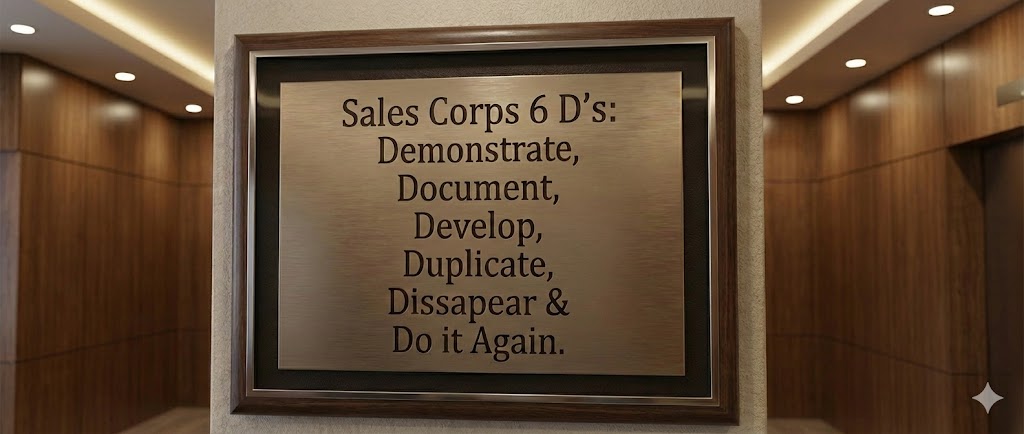
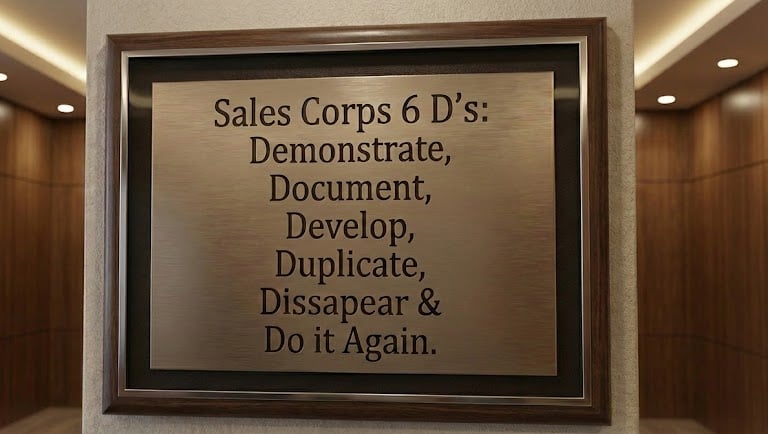
Conclusion: By implementing the 6 D's framework—Demonstrate, Document, Develop, Duplicate, Disappear, and Do it Again—organizations can craft a dynamic sales environment that embraces continuous improvement and adaptation. This approach fosters professional growth among team members, promotes a culture of success, and enables businesses to thrive and expand into new markets. With commitment and effective execution of these principles, multiplying sales and enhancing your sales teams can become a consistently achievable reality.
This is exactly how the founder of Sales Corps has built over 50 direct sales offices throughout his career for a multitude of Telecom & Energy clients. See www.MikeFoster.Pro for more information.


Our mission
We're on a mission to change the way the housing market works. Rather than offering one service or another, we want to combine as many and make our clients' lives easy and carefree. Our goal is to match our clients with the perfect properties that fit their tastes, needs, and budgets.
Our vision
We want to live in a world where people can buy homes that match their needs rather than having to find a compromise and settle on the second-best option. That's why we take a lot of time and care in getting to know our clients from the moment they reach out to us and ask for our help.


Our team
Our strength lies in our individuality. Set up by Esther Bryce, the team strives to bring in the best talent in various fields, from architecture to interior design and sales.


Esther Bryce
Founder / Interior designer


Lianne Wilson
Broker


Jaden Smith
Architect


Jessica Kim
Photographer